
Article
Global retail e-commerce sales are on a massive trajectory, with projections expected to exceed $7.88 trillion by 2028. To capture a meaningful share of this digital marketplace, businesses must be proactive in designing, deploying, and managing a robust online payments ecosystem. Building a reliable financial infrastructure begins with choosing the right payment gateway to connect your digital platform to the global banking system.
A payment gateway is an essential component of modern e-commerce software architecture. It provides a highly secure, flexible, and efficient framework for processing digital transactions, directly improving the end-user checkout experience while maximizing backend operational efficiency.
Whether you are launching an early-stage startup or managing a mature enterprise platform, selecting the right payment rails is vital for sustainable growth. Here is a comprehensive look at how payment gateways operate and why Stripe remains the premier choice for modern digital platforms.
What is a Payment Gateway?
A payment gateway is an online software tool that enables businesses to securely process credit cards, debit cards, digital wallets, and direct bank transfers from their customers. It serves as the secure digital bridge connecting a business's front-end application to its payment processing provider.
When a user initiates a purchase, the gateway securely transmits the encrypted transaction data from the customer to the payment processor, which handles the final authorization and financial settlement. Essentially, the payment gateway is the starting line for online transactions, and it is the mechanism that relays the final approval or decline back to the user interface.
How an Online Payment Transaction Works Under the Hood
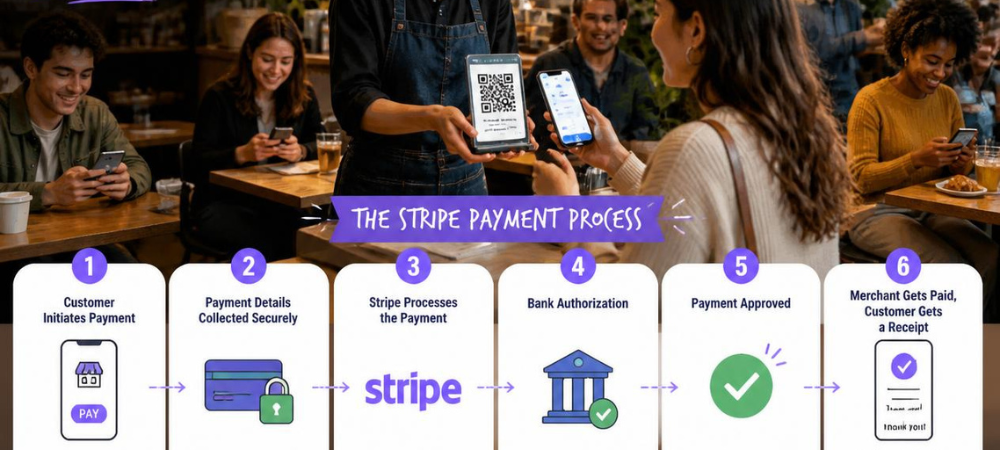
Processing an online payment involves a fast-paced, multi-step sequence designed to balance speed with ironclad data security. The gateway acts as the central intermediary between the merchant application and the customer's credit card issuing bank.
While the entire transaction occurs almost instantaneously, the process relies on five distinct operational steps:
Modern payment gateway solutions do more than just route capital. They also incorporate secondary features like real-time fraud mitigation screening and automated localized tax calculations.
The Core Strategic Benefits of Modern Payment Gateways
Integrating a mature payment gateway into your software application unlocks major operational advantages:
-
Frictionless Customer Experiences: Gateways empower global customers to complete secure checkouts at any time, from any location, and on any device, which drives long-term brand loyalty and repeat purchases.
-
Advanced Threat Protection: By leveraging high-level encryption standards and sophisticated fraud detection filters, gateways protect sensitive card holder data from external breaches and malicious activity.
-
Accelerated Cash Flow: Automated transaction pipelines handle payment authorizations much faster than any manual ledger workflow, speeding up the sales cycle and maximizing business liquidity.
-
Global Scalability: Native support for multiple fiat currencies allows businesses to internationalize their applications smoothly, removing the friction of cross-border shopping for global users.
Why Stripe is the Leading Choice for Global E-Commerce
While there are many payment tools available, Stripe Payments provides an exceptionally reliable, developer-friendly, and unified global payments platform designed to scale with your business demands.
Integrating Stripe into your product stack gives your platform several unique technical advantages:
1. Optimized Checkout Architecture
Stripe saves development teams thousands of custom engineering hours by providing highly optimized, prebuilt user interface components. Your platform gains instant access to over 125 local payment methods alongside Link, Stripe's native accelerated one-click checkout wallet solution.
2. Frictionless International Expansion
Stripe removes the underlying complexity and high cost of cross-border financial operations. Its globally distributed infrastructure opens access to customers across 195 countries while natively settling transactions in more than 135 distinct currencies.
3. Unified Omnichannel Commerce
Stripe makes it simple to merge your online application logic with in-person point-of-sale (POS) hardware. This unified data model allows your business to create cohesive, personalized user interactions, manage comprehensive loyalty rewards, and review your entire revenue pipeline from a single system of record.
4. Maximized Authorization Performance
Stripe relies on intelligent automated routing tools and integrated no-code fraud protection models to maximize transaction authorization success rates. The platform continuously optimizes network paths to block fraudulent actors while ensuring legitimate payments clear without artificial friction.
5. Enterprise-Grade Uptime Reliability
Built to support massive transaction volumes, Stripe delivers an industry-leading 99.999% platform uptime. This high-availability infrastructure ensures your e-commerce application remains completely operational during peak traffic rushes, safeguarding your revenue streams around the clock.